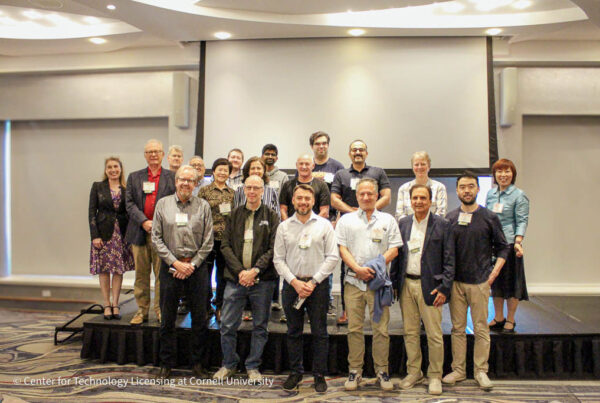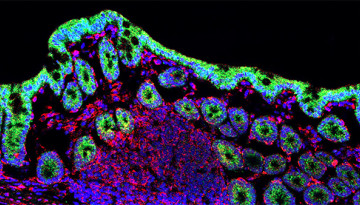

Most founders of early technology companies face a hard-to-bridge gap between initial validation and the milestones needed to scale. Ignite Startup Projects, one of three Cornell gap funding programs managed by the Center for Technology Licensing (CTL), was created to help founders close that gap.
In FY2026, four Cornell-affiliated startups were selected for funding to help support their commercialization work, from FDA validation to first clinical testing to lab build-out. IVSonance, Lucentia Health, Quantera Analytical Services and SensVita each received $75,000 in gap funding through a SAFE note to build and scale products and services grounded in Cornell IP.
Applications for this program are received on a rolling basis. External Technology Advisors — selected for their subject matter expertise relevant to a given proposal — provide written feedback, which is compiled into a due diligence packet for the Ignite committee. Founders then present to a committee of investors and industry experts, who make the final funding decision.
“At this early stage, startups need funding support to reach milestones that make them more attractive — and less risky — to external investors,” says Lynda Inseque, director of technology and venture initiatives and engagement at CTL. “An important part of this program is the role of our external experts: technology advisors and committee members who ensure our funding decisions are grounded in market reality, not just internal assessments.”
Josh Palmer, principal at KairosVC and a technology advisor, describes the program as “a valuable steppingstone for Cornell entrepreneurs who need pre-Seed capital to cover the ‘last mile’ between initial company formation and the milestones needed to raise meaningful private capital.” Palmer has been an advisor for five years. Along with other members, he evaluates startups based on whether the funding will meaningfully move the company forward, and whether the project fits what the program is built to support.
“The program has a robust feedback loop between inventors and advisors. Participating in the program has allowed me to provide my perspective to many newly minted entrepreneurs and then watch in near real time as that feedback influences and improves the next round of proposals,” Palmer says.
FY2026 awardees
IVSonance Biomedical
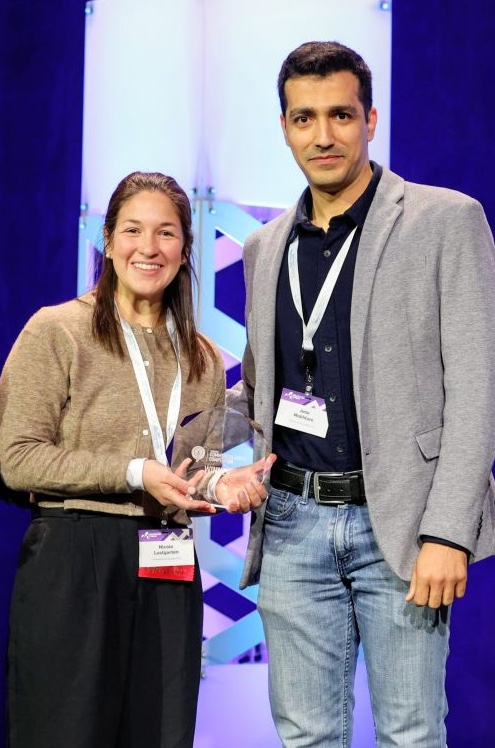
IVSonance is developing SOUND™, an acoustic micromanipulation platform designed to automate oocyte denudation, one of the most technically demanding manual steps in IVF. The technology originated in the lab of Alireza Abbaspourrad, associate professor of food chemistry and ingredient technology at Cornell CALS. Nicole Lustgarten, Ph.D. ’20, CEO; Amir Mokhtare, Ph.D. ’22, CTO; and Gianpiero Palermo, M.D., Ph.D., professor of reproductive medicine at Weill Cornell Medicine and IVSonance’s medical advisor, co-founded the company.
“IVSonance is building technology to automate some of the most delicate, hands-on steps in IVF — work that today depends heavily on highly skilled specialists,” Lustgarten says.
The Startup Projects program is helping the company move its platform from the bench and preclinical validation toward first-in-human testing, supporting the safety and regulatory groundwork required before clinical use. For Lustgarten, the value showed up in more than the funding: “Presenting to a room of experts and answering their thoughtful questions genuinely helped us sharpen our strategy as a company.”
Mokhtare was previously selected as an Ignite Fellow for New Ventures, a venture acceleration program that provides training and exposure to help participants build and run a startup and commercialize technologies from faculty labs. He successfully launched IVSonance through the fellowship.
Lucentia, Inc.
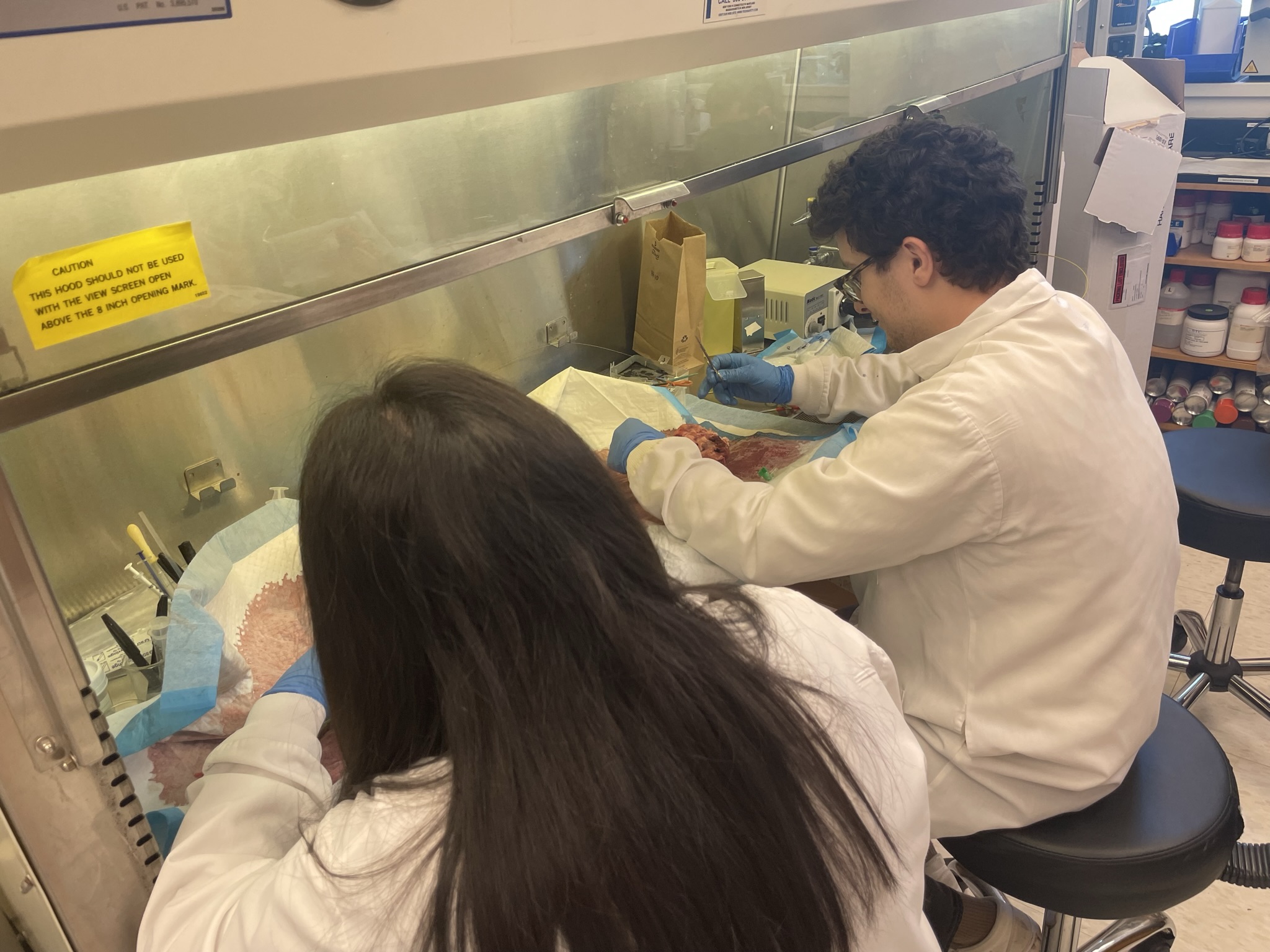
Lucentia is developing AI-enabled coronary diagnostics that turn routine non-contrast coronary artery calcium (CAC) scans into CCTA-like assessments of coronary anatomy and plaque without contrast, new hardware or changes to image acquisition. The technology is built on a proprietary ex vivo coronary dataset originating from NIH-funded research in the lab of Simon Dunham, Ph.D., at the Dalio Institute for Cardiovascular Imaging at Weill Cornell Medicine, where founder and CEO Sahar Jalal, Ph.D., conducted her postdoctoral work.
The company is currently running multi-site retrospective validation across U.S. and European health systems, preparing for FDA 510(k) submission, and beginning commercial pilots with outpatient imaging networks.
“Ignite caught Lucentia at exactly the right moment,” Jalal says. “We had strong Cornell IP, early clinical partnerships, and a defined regulatory path. But we needed the bridge from research to validation readiness.”
Quantera Analytical Services
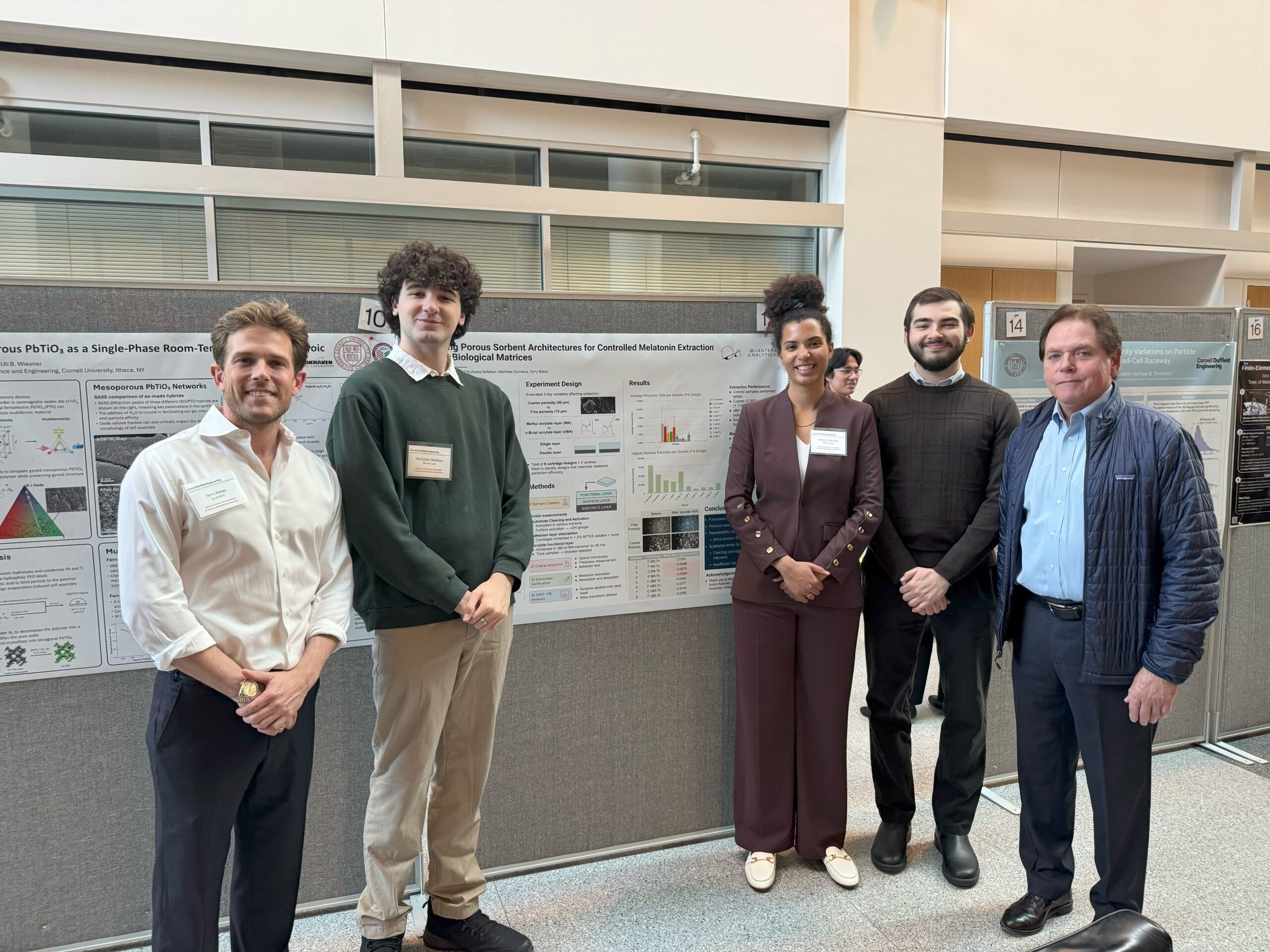
Founded by Terry L. Bates, Ph.D. ’23, Quantera is commercializing Curio, a modular cartridge-based extraction platform that replaces slow, solvent-heavy sample preparation with a high-throughput, field-deployable system. Built on 12 peer-reviewed publications from the lab of Gavin Sacks, chair and professor of food science at Cornell CALS, the technology launches first in food and agriculture QA/QC — grape and wine quality and spoilage testing — with pilots underway at USDA Geneva and with Gallo this harvest season.
“The Startup Projects program is enabling Quantera to fully outfit the lab, engineer our device (including manufacturing scale-up work with the RIT Golisano Institute for Sustainability), and prepare a second-generation platform, the Curio DI,” Bates says. “We are also focused on keeping manufacturing in New York’s upstate region.”
SensVita
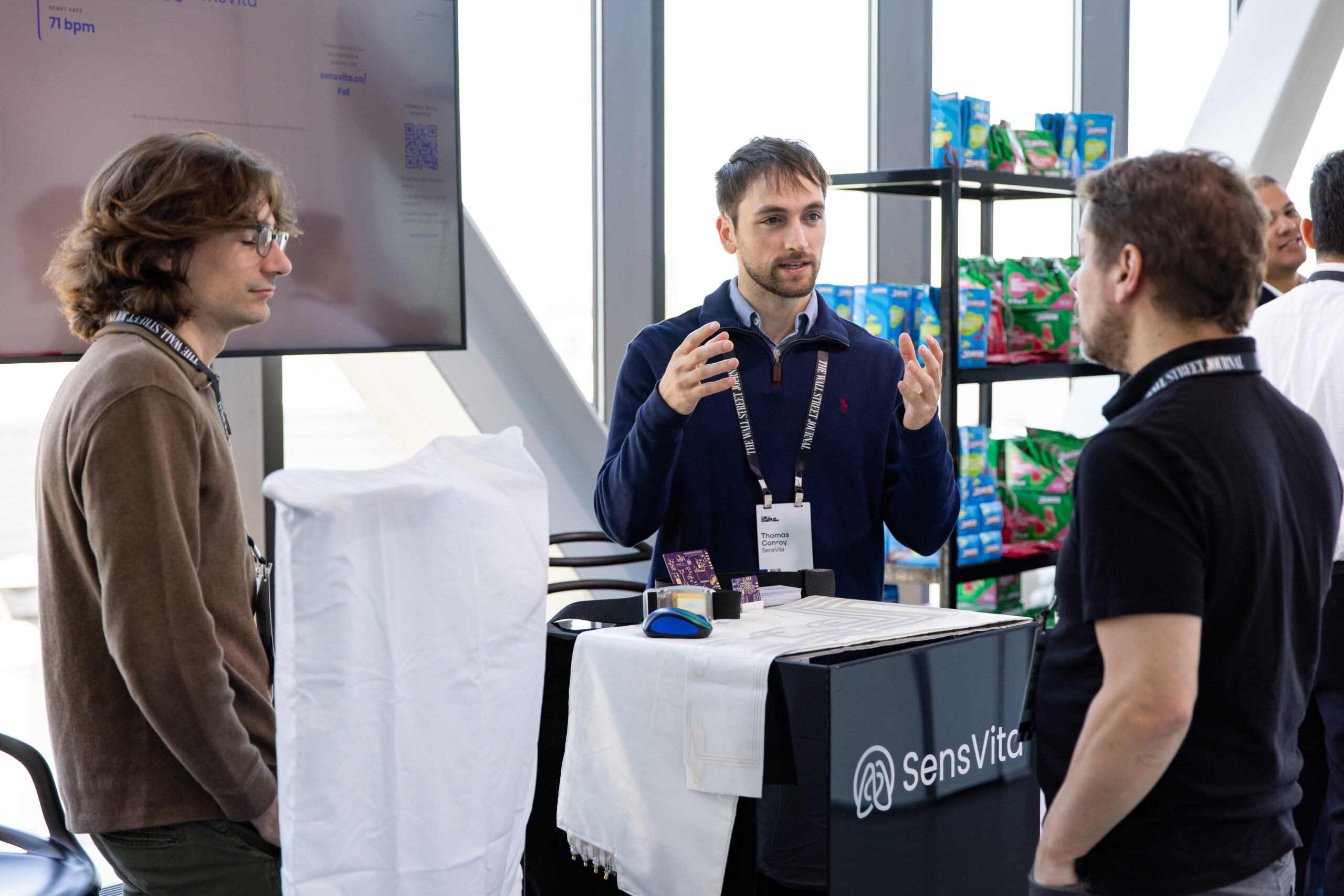
Co-founded by Thomas Conroy, Ph.D. ’24, in the lab of Edwin Kan, professor of electrical and computer engineering at Cornell Duffield Engineering, SensVita is commercializing near-field RF sensing, a non-invasive health sensor capable of monitoring internal organs like the heart and lungs without any skin contact. After eight years of research at Cornell, the technology has completed pilot deployments and been packaged for low-cost commercial use.
“Startup Projects funding will help package these novel sensors in a convenient, low-cost canine harness for preclinical validation data and a productized sensor to show prospective customers,” Conroy says.
The company recently completed Cornell Tech’s Runway Startup Postdoc Program. Kan received an early version of the Ignite Innovation Acceleration grant for the lab, which helped advance the technology toward commercial readiness.
Moving innovations forward
Each Ignite committee member evaluates startups based on scalability potential to the next phase, whether that is a regulatory application, product development or enhancement, corporate partnership, securing paying customers, or gaining institutional investor funding.
In FY2026, CTL received 15 startup submissions. The process, from application to decision, lasts an average of 1.5 to 2 months. Fred Barken, B.A. ’76, M.S. ’77, a retired physician and angel investor who reviews medtech and biotech applications, evaluates projects with a direct lens: “My job is to ascertain whether a proposal might truly change clinical management,” Barken says. “Unless it does so, regardless of the technology’s elegance, it will not be adopted in practice.”
This year, the funding rate was 33%. With a rigorous process, the proposals are evaluated on their own merits, not against one another. “While not all proposals will prove commercially viable, all are clever, well-considered efforts to improve the nation’s health with products stemming from research at Cornell. That is a most valuable asset and deserves the support of the Ignite program,” Barken concludes.
Where the funding leads
The Startup Projects program’s support often becomes a foundation for the next round of capital. It regularly serves as a matching source for other state, federal and private programs, including the CAT Grant, the NY Ventures Pre-Seed Matching Fund, and certain NSF programs.
Anova Biomedical, a Cornell Duffield Engineering spinout founded by Anthony D’Amato, Ph.D., from Professor Yadong Wang’s lab, is one example. The funding helped the company advance its vascular graft technology and build out in-house manufacturing and quality processes. “The Ignite Startup Projects Award helped us make progress in our work that ultimately enabled us to secure a CAT grant,” D’Amato says.
Downstream outcomes have also included recent acquisitions. ExoStellar, an AI-driven cloud optimization platform, received Startup Projects funding in 2019. The company later raised $32 million and was acquired by Qualcomm in 2026. Bactana, an animal-health company developing bacteria-derived extracts, received Startup Projects funding in 2018 and was acquired by Kemin Industries in 2025.
“As of June 2026, 36 startups were funded through this program, and two have already reached exits through acquisition,” Inseque says. “It shows that even a small push, early, can meaningfully shorten a startup’s path forward. This program is becoming more competitive, but our ambition is to support more early-stage startups coming out of Cornell research — and to do that, we need to keep expanding the pool of external experts who bring domain knowledge our founders need.”
Get involved
Applications for Ignite Startup Projects are received on a rolling basis via the CTL website. Startups with active Cornell licenses or affiliations with a Cornell incubator are eligible to apply.
CTL is actively growing its network of Technology Advisors and Committee Members. Alumni and industry professionals with relevant domain expertise who want to get involved can contact Lynda Inseque at lci2@cornell.edu.