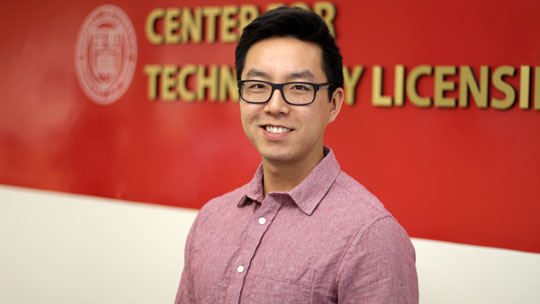

Interns Selected for Immersive Startup Experience Through New Program
interns for startups
Ignite Intern for Startups first cohort

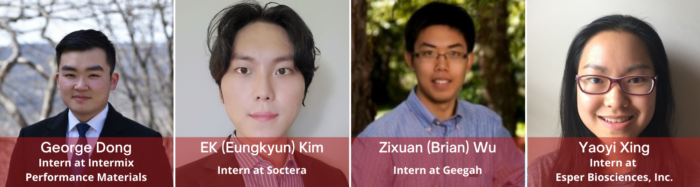
The inaugural cohort of Ignite Intern for Startups, one of Cornell University’s gap funding programs under Ignite Cornell Research: Lab to Market, welcomes a diverse group of students whose backgrounds span from engineering to biological sciences and economics.

With budget constraints, hiring can be challenging for early-stage startups. This program allows eligible companies to recruit and compensate an intern for up to 11 weeks to fulfill an important internship position. The program has supported the selection of four qualified Cornell students working during the summer with Cornell-licensed startups on research and business projects.

“This immersive program is an additional tool within the ecosystem for startups to perform projects that they would not have been able to fund otherwise while providing entrepreneurial exposure to students,” said Lynda Inséqué, senior program manager, technology initiatives & outreach at the Center for Technology Licensing (CTL), who manages the Ignite program. “We are thrilled to welcome the first cohort of Ignite Interns.”

The interns selected were:

George Dong, an undergrad student in the College of Arts and Sciences at Cornell, will work at Intermix Performance Materials, a company developing a multi-block compatibilizer additive technology that increases the efficient and cost-effective recycling of post-consumer mixed plastic waste and produces higher quality resultant resins, as a business analyst intern. George is studying for a Bachelor of Arts in economics with a minor in statistics.

EK (Eungkyun) Kim, a Ph.D. candidate in the electrical and computer engineering department, will work at Soctera, a company developing the world’s first aluminum nitride-based power amplifier, as a radio-frequency device engineer. EK is also part of the Jena-Xing laboratory at Cornell, where he designs, fabricates, and characterizes nitrogen-polar GaN/AlGaN/AIN HEMTs.

Zixuan (Brian) Wu, a Ph.D. candidate in the mechanical and aerospace engineering department, will work at Geegah, a company developing advanced sensors to offer the most secure and convenient biometric sensors, as an ultrasonic imaging microsystem development intern. Brian is also part of the Bio-Inspired Fluid Laboratory (Jung Lab) at Cornell, where he has worked on several projects from drop fragmentation on superhydrophobic (SH) substrates from high inertia impact to identifying rainforest canopy species from acoustic analysis of the leaf-raindrop effects.

Yaoyi Xing, an undergrad student in the College of Arts and Sciences at Cornell, will work at Esper Biosciences Inc, a company developing a low-cost, high-speed DNA sequencer for point-of-care medical diagnostics and scientific research, as a molecular biology intern. Yaoyi is studying for a Bachelor of Science in biological sciences.

Ignite Intern for Startups is funded by the Office of the Vice President for Research and Innovation (OVPRI) and managed by the Center for Technology Licensing at Cornell University. Learn more here.


About Ignite Cornell Research: Lab to Market

Ignite: Cornell Research Lab to Market gap funding series is overseen and managed by Center for Technology Licensing, Cornell’s tech transfer office, and supported by the Office of the Vice President for Research and Innovation (“OVPRI”). Its purpose is to accelerate technology commercialization, venture creation and growth, and corporate collaboration, create training and career opportunities for students and researchers for entrepreneurship and advance Cornell innovation for societal impact and university mission. With major expansion in FY2022, funding level for the Ignite series has been increased to $3 million per year with ambitious goals to grow innovation pipeline for success and impact. The gap funding series is supported by the Provost’s office and a generous donation from Peggy J. Koenig ’78.

Contact
Lynda Inséqué
Senior Program Manager, Technology Initiatives & Outreach
CTL
lci2@cornell.edu


Media Contact
Veronica Buezo Talavera
Manager, Digital Media & Marketing
CTL
vbt6@cornell.edu
$3 million infusion for gap funding promises a surge in Cornell’s innovation pipeline

Ignite banner

Ignite, Cornell University’s gap funding series, will expand its innovation pipeline in the coming years using a $3 million annual infusion of funding from the provost’s office and a handsome donation from alum Peggy J. Koenig, chair of the private equity firm Abry Partners.

Cornell’s Center for Technology Licensing (CTL), led by Executive Director Alice Li, oversees and manages the gap funding series, which is comprised of four distinct but inter-related programs:

Get the full article via Tech Transfer Central here.

Five companies ‘graduate’ from Cornell incubators

Photo of graduates from our incubators

As the pandemic pomp and COVID circumstances dissipate, Cornell’s business incubators officially graduated five startup companies – formally known as the Class of 2021 – on June 7 and helped to put them on the fleet highway to success.

Lou Walcer, director of the Kevin M. McGovern Family Center for Venture Development in the Life Sciences, and Robert Scharf, director of the Praxis Center for Venture Development, conferred certificates to the leadership of the freshly minted graduating groups: Ava Labs, Exotanium, Halomine, Sonder Research X and Zymtronix, all of which are Cornell-licensed startups.

Learn more via Cornell Chronicle here.

Startup Roundup: Antithesis Foods, Guard Medical, C2i, Bactana

Fun, decorative illustration of a rocketship.

Three Cornell-licensed startups and one Cornell eLab student accelerator company are paving the way to success.

NSF awards $1M to Cornell snack startup Antithesis Foods

It began as a Cornell classroom project and has blossomed into student startup company. Now, the National Science Foundation has awarded a nearly $1 million small-business grant to Antithesis Foods for its novel invention to make healthy snack foods and crunchy ingredients from chickpeas and other legumes – all low-calorie, high-fiber and high-protein.

The funding advances a nutrient-dense, crunchy ingredient to get healthier snacks such as graham crackers, cereals, chips, granola and cookies on supermarket shelves.

Guard Medical raises $11M in Series B investments

Guard Medical Inc. has raised a Series B investment of $11 million to support commercialization and clinical studies for its product NPseal, a negative pressure wound therapy dressing for closed incisions. The Series B completion was announced April 6.

C2i launches disease test in Europe

C2i Genomics, a cancer intelligence company using software licensed through CTL, launched its C2inform minimal residual disease test across Europe.

The C2inform test applies whole-genome sequencing and artificial intelligence to a 3 to 4 milliliter blood sample, which supports rapid and accurate detection of cancer, monitors disease progression and evaluates therapeutic efficacy, according to the company.

Bactana receives NSF business grant

The NSF has awarded Bactana Corp., a company that graduated from Cornell’s Kevin M. McGovern Family Center for Venture Development in the Life Sciences business incubator three years ago, a Small Business Innovation Research (SBIR) Phase I grant to expand research and development for a bacteria-derived therapeutic drug.

Learn more about Startup Roundup: Antithesis Foods, Guard Medical, C2i, Bactana on the Chronicle.

Cornell Joins NY-Led Group To Propose Hydrogen Energy Hub

Cornell and two Cornell research-startups have joined a consortium that aims to propose a Northeast research hub to make hydrogen a viable, clean-energy alternative to carbon-based fuels.

The New York-led multistate collaboration is guided by Gov. Kathy Hochul and organized by the New York State Energy Research and Development Authority (NYSERDA).

With approximately $9.6 billion available in federal funding, the U.S. Department of Energy (DOE) is expected to request proposals starting in early May for regional hydrogen centers that would offer a broad array of services, which will likely include research and demonstration projects. The Northeast group plans to apply for a portion of that federal funding.

Photo of Qihao Li, left, Geoff Coates, the Tisch University Professor of Chemistry and Héctor Abruña, the Émile M. Chamot Professor in the Department of Chemistry

* Qihao Li, left, Geoff Coates, the Tisch University Professor of Chemistry and Héctor Abruña, the Émile M. Chamot Professor in the Department of Chemistry, discuss hydrogen energy. Courtesy of Cornell Chronicle.

“I’ve never seen anything quite like this in my entire career,” said Héctor Abruña, the Émile M. Chamot Professor in the Department of Chemistry in the College of Arts and Sciences, who will represent Cornell in the collaboration. He is also the director of the Center for Alkaline Based Energy Solutions (CABES), a national-level research consortium. “The level of commitment – by The White House and the Department of Energy – is astonishing.”

Learn more about Cornell Joins NY-Led Group To Propose Hydrogen Energy Hub. (Cornell Chronicle)

Watch Out Chicken, Here Comes Hemp

Hemp is a favorable addition to plant-based proteins. It is one of the fastest-growing plants in the world, and it may be less allergenic than other sources of plant protein.

An Impossible Burger from Trillium, lentil meatballs from Martha’s Café, and soy milk lattes from Café Jennie—plant protein is found almost everywhere on campus, offering more sustainable and healthy alternatives to traditional animal proteins. Three sources of plant protein currently dominate: soy, pea, and wheat. But recently, hemp has been added to the mix.

Hemp plants, like marijuana, belong to the cannabis family and produce compounds called cannabinoids. Under United States law, hemp is defined as having no more than 0.3 percent delta-9-tetrahydrocannabinol (THC), the most psychoactive cannabinoid. (In marijuana, concentrations of THC can reach 30 percent or more.) Nevertheless, hemp plants can be bred to produce other cannabinoids, such as the widely marketed cannabidiol (CBD).

Hemp was federally legalized for research purposes in 2014and commercial purposes in 2018. Because its legalization is fairly recent, hemp has not been thoroughly researched. Ph.D. candidate Martin Liu is interested in how hemp might function as a food source, and particularly as a source of protein.

Martin Liu

Liu’s research compares distinct strains, or cultivars, of hemp that are intentionally bred for specific characteristics. With each cultivar, he looks at the type and amount of protein found in the seed and other qualities affecting how it might be used as a food.

“Hemp can be bred for a whole variety of purposes. Some cultivars are best for cannabinoids, [others are best for] food products, and you can even grow hemp for fibers which can be used in construction materials. It’s a very interesting plant,” Liu says.

Learn more about Watch Out Chicken, Here Comes Hemp. (Cornell Research)

Eurofins Viracor and Cornell University Sign Exclusive Licensing Agreement

Eurofins Viracor, LLC, a leader in testing for infectious disease, immunology, and allergy, announced that it has entered into an exclusive license agreement with Cornell University to commercialize several ground-breaking and novel assays aimed at transforming the clinical management of COVID-19 and transplant patients impacted from tissue damage and infections.


Surgical biopsy is critical in tracking damage of COVID-19 in the body, but the procedure can be painful and costly to the patient. The Cornell University team, led by Dr. Iwijn De Vlaminck, an associate professor at the Meinig School of Biomedical Engineering, has developed an alternative to biopsy – a novel, noninvasive blood test to measure organ injury from COVID-19. The test uses circulating cell-free DNA (cfDNA) to gauge the damage that COVID-19 inflicts on cells, tissues, and organs.


Learn more about Eurofins Viracor and Cornell University Sign Exclusive Licensing Agreement.

Partnership Bears Fruit With Release of Two New Grape Varieties

Two newly released grape varieties, developed collaboratively between Cornell AgriTech and Sun World International, a global fruit genetics and licensing company, offer new flavors for consumers and better growing characteristics for farmers.

Sugrafiftytwo, an ultra-early ripening green seedless grape variety with a sweet Muscat flavor and firm crisp texture, and Sugrasixty, a midseason ripening red variety with large berries and a tropical aroma with overtones of mango, are the fruit of a 13-year collaboration between Cornell AgriTech and Sun World.

Through the partnership,  the royalties from the commercialization of the varieties developed by both organizations will continue to flow back to and support the Cornell Grape Breeding and Genetics Program, which is led by Bruce Reisch, professor in the School of Integrative Plant Science in the College of Agriculture and Life Sciences.

“With the right varieties, the Eastern table grape industry might consider expanding,” Reisch said. “That could drive economic development through tourism, farm markets, and home enthusiasts. Many home growers are interested in doing something new.” Reisch credits Cornell’s partnership with Sun World for making the development of these new varieties possible.

Learn more about Partnership Bears Fruit With Release of Two New Grape Varieties.

grapes on the vine

Sugrasixty is a midseason ripening red variety with large berries and a tropical aroma with overtones of mango. Courtesy of Cornell Chronicle/Sun World.

Collaboration Is a Good Fit for Wearable Sensor Startup

Sometimes you want your technology to be fast, sleek, eye-catching, and responsive. And other times? You want to be able to throw it into the wash because it got a little sweaty.

In the case of Organic Robotics Corporation (ORC), you want all of the above.

The Cornell startup specializes in creating soft, stretchable fiber-optic sensors that can be woven into clothing to recognize different types of touch. The wearable technology is proving to be ideal for measuring motion, respiration, and fatigue in athletes, with the aim of reducing injuries and improving training and performance.

Now, a collaboration with Cornell’s Performance Apparel Design Lab is taking ORC’s technology to a different field: monitoring the stamina and attention of airplane pilots, astronauts, and other highly stressed individuals working in harsh environments.

While these applications seem like natural fits for ORC’s technology, they didn’t start that way.

“Translating a technology from a lab is difficult,” said Rob Shepherd, associate professor in the Sibley School of Mechanical and Aerospace Engineering in the College of Engineering, who co-founded the company with ORC’s CEO Ilayda Samilgil ’19. “Usually a company will listen to problems and then find solutions to those problems. But when you’re doing it from a lab, you have a solution, and you’re trying to find a problem.”

group tests tecchnology in lab

Organic Robotics Corporation CEO Ilayda Samilgil, Huiju Park, associate professor of apparel design, and ORC mechanical engineer Andres Serrano test their technology at the startup’s lab in Clark Hall. Image courtesy of Cornell Chronicle.

Learn more about Collaboration Is a Good Fit for Wearable Sensor Startup.

Cornell Start-Up To Test Novel Paradigm for Cancer Drug Delivery

A start-up co-founded by researchers at Cornell University has initiated the first therapeutic trial evaluating fluorescent silica nanoparticles, known as “Cornell dots,” as a potential treatment for cancer.


Their ultrasmall size, below the cutoff for renal clearance, sets the Cornell dots apart from previous drug delivery vehicles promising high safety and efficacy.


Originally created in the lab of Ulrich B. Wiesner, Ph.D., Cornell dots have already demonstrated diagnostic efficacy in finding tumors in the clinical setting.


Since the technology’s introduction, Elucida Oncology Inc., a biotechnology company Wiesner co-founded, has further developed the nanoparticles, now known as C’Dots, and will assess them for therapeutic use in targeted drug delivery among patients with advanced, recurrent, or refractory cancers.


“Lots of drugs on the shelves of pharmaceutical companies have not made the cut because they may have had severe side effects,” Wiesner told Healio. “When you put them onto ultrasmall delivery vehicles like C’Dots, it could make all the difference. As a result of their rapid renal clearance, they reach the tumor and are efficacious but without the side effects. Once we verify this ‘target-or-clear’ paradigm, there’s no end to what is possible.”


* Image courtesy of Healio.

Learn more about Cornell Start-Up To Test Novel Paradigm for Cancer Drug Delivery.