
Ignite Alum Joins Center for Life Science Ventures

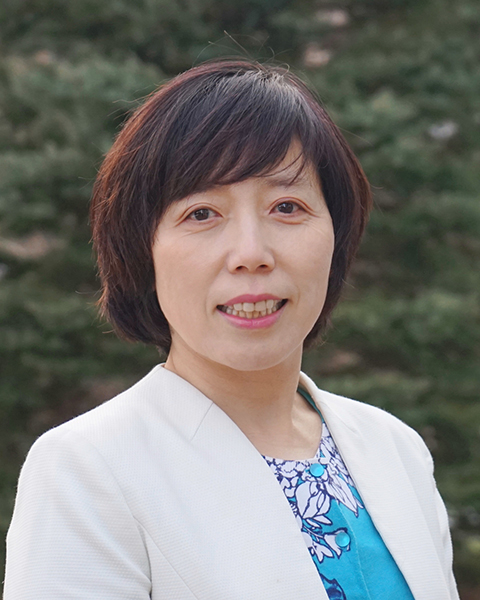
Anova Biomedical, a Cornell spinout developing biodegradable vascular grafts, recently joined the university’s Center for Life Science Ventures.  

Co-founders Anthony D’Amato, a former postdoctoral researcher, and Yadong Wang, the McAdam Family Foundation Professor of Heart Assist Technology in the Meinig School of Biomedical Engineering, developed the innovation through research in Wang’s lab. So far, Anova has licensed 11 patents from the lab, including intellectual property in composition, design and manufacturing. 

D’Amato, now CEO, graduated from the first cohort of the Ignite Fellow for New Ventures program in August 2024, leading to the formation of Anova Biomedical. 
Read the full story in the Cornell Chronicle.  

Cornell Inventor Héctor D. Abruña Wins Prestigious Fermi Award

Héctor D. Abruña, the Émile M. Chamot Professor of Chemistry in the Department of Chemistry and Chemical Biology in Cornell’s College of Arts and Sciences, recently won the Enrico Fermi Presidential Award for his cutting-edge innovations in energy storage and fuel cells. 

Abruña has been a prolific inventor throughout his time at Cornell. His research has resulted in 39 inventions disclosed to the university, resulting in 29 US and international patents with more patent applications pending. 

Several technologies developed by Abruña played key roles in the formation of two Cornell spinouts, Factorial Energy and Conamix. Both startups offer safe, high-performing battery technologies for electric vehicles, homes, and other critical applications. 

Read the full release.

Aldwinckle, Wiesner elected to National Academy of Inventors

For their work on strengthening food crops against pests and diseases, and on hybrid materials for applications including cancer therapeutics, respectively, Cornell professors Herb Aldwinckle and Ulrich Wiesner have been elected fellows of the National Academy of Inventors.

Aldwinckle, a professor emeritus of plant pathology and plant-microbe biology in the College of Agriculture and Life Sciences (CALS), and Wiesner, the Spencer T. Olin Professor in the Department of Materials Science and Engineering and professor in the Department of Design Tech, are among the 2024 class of fellows announced Dec. 10 by the academy.

The 2024 class “represents a truly impressive caliber of inventors,” said Paul Sanberg, president of the National Academy of Inventors. “Each of these individuals are tackling real-world issues and creating solutions that propel us into the future. Through their work, they are making significant contributions to science, creating lasting societal impact, and growing the economy.”

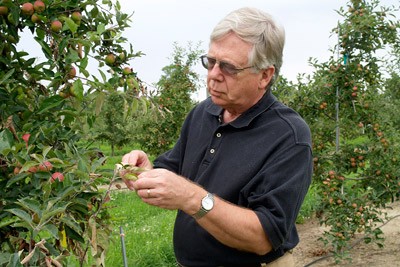
man tends to apple tree
Herb Aldwinckle, professor emeritus of plant pathology and plant-microbe biology in the College of Agriculture and Life Sciences.

Aldwinckle’s research has focused on disease management in plants, and in recent years, strengthening plant varieties using classical hybridization techniques. Teaming up with other geneticists, Aldwinckle worked on crossbreeding apple rootstocks to improve hardiness against diseases such as the devastating fire blight. 

In addition to working on disease resistance in apple varieties, Aldwinckle is also known for his work on encoding transgenes in plants that end up expressing polypeptides, which subsequently deter certain insects from feeding on the plant. The sap-sucking insect pests, or psyllids, can serve as vectors for microbial species and toxins, causing pathogenesis in crops. Aldwinckle’s transgenic plants and plant components invention allows an added layer of protection against psyllids in plants such as sweet oranges, tomatoes and potatoes.

“I would like to acknowledge the close and generous collaboration I have had throughout my career at Cornell with my colleagues, Jim Cummins, emeritus professor of pomology (CALS), Gennaro Fazio, adjunct associate professor of horticulture (CALS), and Terence Robinson, professor of horticulture (CALS),” said Aldwinckle. “I’d also like to recognize the invaluable role that the Center for Technology Licensing at Cornell has played in the successful commercial implementation of our technologies for the benefit of apple growers and consumers in the United States and elsewhere.”

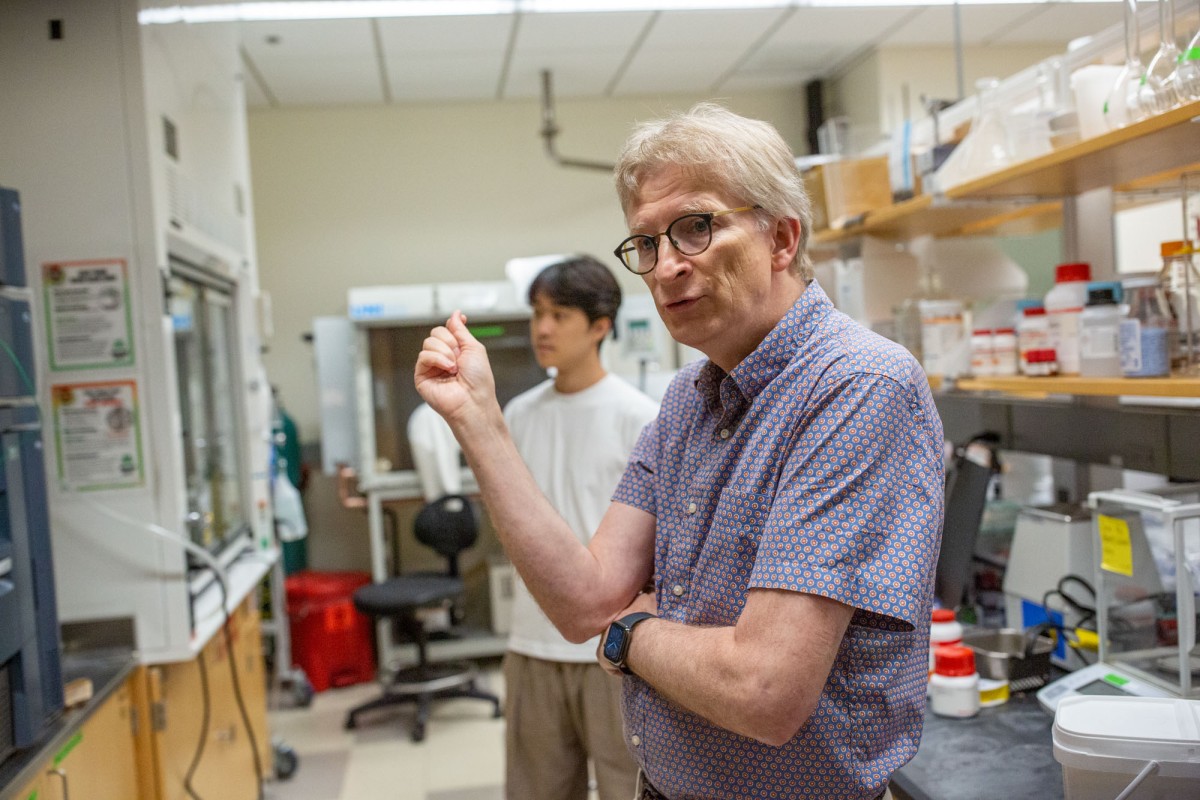
man in lab
Ulrich Wiesner, the Spencer T. Olin Professor in the Department of Materials Science and Engineering and professor in the Department of Design Tech.

Wiesner works at the intersection of polymer science and inorganic solid-state chemistry, creating multifunctional nanomaterials for applications in energy, separations and nanomedicine, among others. One of his most notable inventions is fluorescent core-shell silica nanoparticles, known as C’Dots, that are paving the way for advancements in diagnosis and treatment of cancer and other diseases. Wiesner’s groundbreaking work in this area led to his role as co-director of the NIH funded MSKCC-Cornell Center for Translation of Cancer Nanomedicine and co-founder of several startups pushing C’Dots into human clinical trials.

Additionally, Wiesner’s research has catalyzed advancements in filtration technology. He co-founded TeraPore Technologies, which develops novel nanofiltration products engineered using tunable self-assembled block copolymers. The technology is revolutionizing virus filtration in the pharmaceutical industry with the first product launch in the fall of last year, reducing contamination risks in biological drugs.

“I very much appreciate the honor to be elected Fellow of the NAI. Since coming here I got more and more interested in having real-world impact beyond academic paper writing and Cornell provided ample opportunity with its growing support infrastructure to make that happen,” said Wiesner, who holds more than 150 national and international patents and patent applications.

Aldwinckle and Wiesner will be honored and presented with medals by a senior official of the United States Patent and Trademark Office at the Annual Meeting of the National Academy of Inventors on June 26 in Atlanta, Georgia.

Originally published on Around Cornell.

New Ignite Fellows Selected to Advance Cornell Innovations to Market 

Four Cornell University researchers have been accepted into the third cohort of the Ignite Fellow for New Ventures program from the Center for Technology Licensing (CTL). By training scientists and engineers to build solid, high-value businesses, the program aims to expand the real-world impact of research and enrich Cornell’s venture ecosystem. 

Each fellow is partnered with a faculty inventor to establish a startup based on a technology developed at Cornell. During the program, fellows will work in their faculty inventor’s lab and report to one of the incubator directors at the Center for Life Science Ventures, the Praxis Center for Venture Development, or the Runway Startups program for business development support. 

This model leverages the technical expertise of the labs where inventions are created and Cornell’s venture incubation resources to build a solid foundation for new ventures. Fellows also receive financial support allocated toward their compensation and basic experiment expenses. 

“The Ignite Fellow program is gaining recognition as a new path to nurture scientist and engineer entrepreneurs and build strong foundations for deep tech startups,” said Alice Li, Executive Director of CTL. “We hope the third cohort will ride on the momentum in creating valuable new ventures.” 

Previously, the Ignite Fellow for New Ventures program was broken into two 12-month phases. This cohort is the first recruited under the program’s new 12-month model, a simplified version of the program that accelerates fellows’ paths to licensing and impact. 

The fellows in this cohort demonstrate the entrepreneurial mindsets, technical expertise, and business plans needed to successfully pursue a new venture. Each venture project represents a different academic discipline, demonstrating the diversity of innovative technologies emerging from Cornell. 

“One of the Ignite Fellowship’s greatest strengths is the simultaneous development of both the technology and the fellow,” said Aaron Delahanty, Venture Manager at CTL. “As the innovations are driven towards market-ready products, fellows are prepared for leadership roles and equipped to build strong executive teams that can support continued growth of their new companies.” 

The selected fellows and their venture projects are: 

Technology: Anionic Cloaking Reagents for Intracellular Protein Delivery with Cationic 

Lipids 

  • Fellow: Azmain Alamgir 
  • Faculty inventors: Christopher Alabi, Ph.D., Associate Professor, and Matthew DeLisa, Ph.D., William L. Lewis Professor, Smith School of Chemical Engineering, College of Engineering 
  • Incubator Director: Lou Walcer, Center for Life Science Ventures 
  • Venture project: Azmain is commercializing a novel reagent to improve delivery of protein-based therapeutics into cells, with applications in pharmacology and as a research tool for studying the function of full-length proteins inside cells. 

Technology: Characterizing and Diagnosing Inflammation Using Cell-Free RNA 

  • Fellow: Conor Loy 
  • Faculty inventor: Iwjin De Vlaminck, Ph.D., Professor, Meinig School of Biomedical Engineering, College of Engineering 
  • Incubator Director: Lou Walcer, Center for Life Science Ventures 
  • Venture project: Conor’s technology leverages plasma cell-free RNA (cfRNA) in the blood to profile inflammation, providing a diagnostic platform for pediatric inflammatory diseases and for complications of cancer immunotherapies. 

Technology: Objective pAIn – An AI-Based Pain Biomarker 

  • Fellow: Hayford Agbanu Perry Fordson 
  • Faculty inventors: Adam Anderson, Ph.D., and Eve De Rosa, Ph.D., Professors, Department of Psychology, College of Human Ecology 
  • Incubator Director: Fernando Gomez-Baquero, Runway and Spinouts 
  • Venture project: Hayford is developing an objective, AI-based platform to accurately assess pain threshold, tolerance, and emotional distress using cardiac sensors. Applications of the technology include assessing patients who are unable to report their pain and providing “proof of pain” to help medical professionals administer appropriate levels of pharmaceuticals such as opioids. 

Technology: AI-Driven Material Models for Engineering Simulations 

  • Fellow: Steven Yang 
  • Faculty inventor: Nikolaos Bouklas, Ph.D., Associate Professor, Sibley School of Mechanical and Aerospace Engineering, College of Engineering 
  • Incubator Director: Robert Scharf, Praxis Center for Venture Development 
  • Venture project: Nikolaos’ team is building an AI-based tool for material modeling to accelerate the cycle from materials discovery to product development. The service provides insight into how a new material will respond to different forces, reducing the time and resources manufacturing companies must invest to develop material models. 

“With my technology, we have a platform that can go in many different directions,” Loy said. “What I’m hoping to get out of the program is focus, so we can decide what we want to pitch to investors and make that decision before raising any money. We’re currently preparing for large-scale validation studies so that when we graduate from the program, we can hit the ground running.” 

The Ignite Fellow for New Ventures Program continues to help Cornell researchers bridge the gap between research and commercialization, demonstrating the university’s commitments to interdisciplinary collaboration and societal impact. The program enables fellows to maximize the impact of their technology to address some of the world’s most pressing challenges. 

“As recent graduates or postdocs, bringing deep technical expertise along with a strong willingness to learn and adapt, combined with the support of structured programs like the Ignite Fellow for New Ventures Accelerator, creates a strong foundation for building sustainable startups that can deliver innovative solutions for societal benefit,” said Lynda Inseque, Director of Technology and Venture initiatives & Engagement at CTL. 

Applications for the Ignite Fellow for New Ventures 2025 cohort will open on November 1, 2024. Learn more about the program and application process here: https://ctl.cornell.edu/ignite/fellow-for-new-ventures/  

The Ignite Fellow for New Ventures program is one of the four signature programs of the Ignite Cornell Research Lab to Market gap funding series. For more information, visit the official program website at https://ctl.cornell.edu/ignite/ 

Ignite alum Gallox Semiconductors joins Breakthrough Energy Fellows

Gallox Semiconductors, led by Jonathan McCandless, Ph.D. ’23, has been selected for the fourth cohort of the Breakthrough Energy Fellows, a group of entrepreneurs focusing on technology that reduce greenhouse gases. The startup will develop gallium oxide-based electronic components with enormous potential to reduce energy losses from inefficiencies in electrical power conversion.

The Breakthrough Energy Fellows are a part of Breakthrough Energy’s Discovery platform that provides technical support, funding and business resources to the innovators working in industries that have been difficult to decarbonize. This hands-on support allows the fellows to bring their climate technology to market faster and bridge the gap between innovation and implementation.

Read the full story on the Cornell Chronicle.

Ignite Connect 2024 Bridges Innovators with Investors and Industry Experts for Real-World Impact   

On January 31st, the Center for Technology Licensing (CTL) at Cornell University hosted the first “Ignite Connect 2024: Accelerating Impact” virtual event, which presented the latest technologies, new ventures, and recent startups arising from the Cornell labs and recipients of Ignite gap funding awards. The conference convened more than 150 investors, entrepreneurs, industry partners, and Cornell alums, among others, interested in forging long-lasting partnerships. This gathering serves as a testament to Cornell’s collective support in technology development and new venture development and startup growth. The event was structured into three distinct sections: 

  • A general forum highlighted the impact of past successful Ignite recipients; 
  • Pitch sessions across five unique tracks provided a platform for funded projects, their progress, and requirements to achieve key milestones; 
  • A networking segment aimed to foster connections between Ignite recipients and attendees, over 65% of whom were alumni, industry experts and investors. 

“Today, we gather to forge new connections between these promising opportunities with a community as vibrant and diverse as our endeavors,” said Alice Li, executive director of CTL, during her welcome address. “A community of passionate investors, visionary entrepreneurs, collaborative industry partners, and our dedicated Cornell alumni reflected on the progress we’ve made.”  

Li emphasized the importance of the program to bridge the gap and increase innovation. She expressed gratitude towards the committee members and technology advisors for their time, dedication, and expertise. These individuals, comprising industry and investment experts, played a pivotal role in reviewing, advising, and selecting the numerous applicants for the program series. “Your contributions are the backbone of our success, and I extend my deepest appreciation for your unwavering support,” Li concluded.  

The forum transitioned to the opening remarks by Krystyn Van Vliet, Ph.D., VP for Research and Innovation at Cornell. “CTL is part of a larger team that’s extremely passionate about helping our students, staff, and faculty take their ideas, innovations, and ventures to impact,” she said. “And it takes so much more than a village to be able to do that.”  

After a year as the leader of this ecosystem, Professor Van Vliet emphasized the importance of the gap funding and the programs that comprise the Ignite umbrella but also the importance of investing in people, their technologies, and new connections to make the most of Cornell’s focus on the Greatest Good.   

Cornell’s diverse Research & Innovation ecosystem focuses on solving the most immediate to the most complex societal problems and moving them into translation to impact the market. “That’s what innovations are about,” Van Vliet emphasized. “Whether it is a new computational technology or a new process that reduces the environmental impact on things that we all need so that it will thrive on earth.”   

Carbon to Stone’s journey to market impact  

Following Professor Van Vliet’s welcoming remarks, Peggy Koenig ‘78, chair of Executive Committee Cornell Board of Trustees and chair emeritus of ABRY Partners, took the stage. She introduced Greeshma Gadikota, Ph.D., associate professor, Croll Sesquicentennial Fellow at the College of Engineering. Gadikota is also co-founder of Cornell startup Carbon to Stone (CTS), a venture that collaborates with various industries to transform CO2 and residual materials into usable resources. The conversation centered on the company, the support provided by Cornell for her intellectual property (IP) and her new venture, and the growth plans for CTS.  

As a Cornell alum, Koenig has been a great supporter of the innovation initiatives at CTL. In fiscal year 2022, the Ignite available funding increased to $3 million thanks to financial support from the provost’s office and a $1 million gift from Koenig. Her donation has helped in awarding more lab application projects leading to insightful impact. Nearly 50% of the completed awarded Innovation Acceleration projects have led to a license agreement or a license option. 

During their conversation, Dr. Gadikota shared her experience as a faculty-researcher turned innovator and entrepreneur. She emphasized the significance of CTL and the Ignite gap funding she received. “I wouldn’t be here without the support of Cornell Technology Licensing office,” she said.   

Her intellectual property journey started when she disclosed her innovation to CTL. Dr. Gadikota speaks from experience and advises having a robust dialogue with the business development team, particularly when it comes to patenting—understanding the uniqueness of a patent, crafting claims effectively, and co-creating a strategy that benefits all parties involved. On the licensing front, choosing the right approach is equally important for mutual success.  

Leveraging the resources provided by the Fellow for New Ventures program managed by CTL, Hassnain Asgar, a former postdoc from Dr. GadiKota’s lab, underwent training, de-risked the technology in the lab, and worked with Robert Scharf, incubator director at Praxis. 

“Being granted this fellowship meant a substantial year-long funding boost,” she mentions. 

Professor Gadikota and Asgar co-founded the company and began applying for SBIR grants. Upon graduating from the program, Asgar and the newly appointed CEO were able to operate the company. As a result, CTS secured half a million dollars through a carbon removal pre-purchase from Frontier Strike Climate. “Those are the two catalytic moments that really helped in advancing our technology,” she remarked. Moreover, the company received additional federal grants, including $256,500 from the U.S. Department of Energy in 2023.   

Despite their current success, Dr. Gadikota’s initial doubts led the team to undertake comprehensive research, engaging in numerous interviews and drafting grants to gauge market interest. These efforts paved the way for industry recognition and fruitful partnerships.   

“Balancing life between academia and entrepreneurship is challenging, but I approach it from an academic lens, with a perspective of learning,” Greeshma states. She further explains the dynamic interplay between her roles: “We might have a solution, but the question remains – how will it scale? Or, we have a scalable solution, yet we require deeper fundamental knowledge. I found that loop of knowledge creation to be particularly satisfying,” she notes, emphasizing that this cycle is a source of continuous learning. 

Looking ahead, CTS’s growth plan falls in its distinctive strategy of enabling industrial decarbonization. The goal is to reduce the carbon footprint of key commodity products, integrating economic and environmental benefits across the supply chain, leveraging renewable energy, and considering emissions and materials management.  

In her final remarks, Dr. Gadikota offered guidance to emerging faculty and student entrepreneurs on transforming research into marketable products. She urged them to seek the right fit with partners and customers rather than rushing into commitments. “The initial team is pivotal in determining a company’s direction and growth, underlining the significance of deliberate consideration in hiring to ensure alignment with the company’s vision and individual growth,” she concluded.  

Pitching and connecting impactful innovations across disciplines  

Furthering the event’s mission to catalyze impact, the forum branched out into five thematic breakout rooms, focusing on pitches from Ignite’s awardees from the Innovation Acceleration, Ignite Startup, and Fellow for New Ventures programs. A total of 26 presenters from an array of sectors such as Therapeutics and Vaccines, Diagnostics and Biotech Tools, MedTech and Digital Health, Materials and Energy, and High Tech and Hardware pitched their innovations or companies to potential funders and investors.    

As the event concluded, attendees had the opportunity to network, connect, and nurture potential collaborations and partnerships. This segment led to 15 connections which will hopefully lead to meaningful outcomes.  

CTL’s Business Development & Licensing team, the Bioventure elab at Weill Cornell, the Praxis Center for Venture Development, and the Cornell Tech Runway program held virtual booths garnering attendees’ interest while sharing the various support from the Cornell Innovation Ecosystem fostering innovation and entrepreneurship. 

The Cornell community was left inspired and motivated, reflecting on the potential for greater achievements and impact through collaboration, innovation, and a shared vision from Professor Gadikota for a sustainable future. For more information about the Ignite program, visit CTL’s website here https://ctl.cornell.edu/ignite/.   


Written by: Yingzi(Catherine) Lin  

Center for Technology Licensing program continues to fund early-stage Cornell lab innovations

Ignite Innovation Acceleration

Cornell’s Center for Technology Licensing (CTL) has announced the Ignite Innovation Acceleration grant recipients for the Fall 2023 application cycle.

The eight projects range from advanced healthcare solutions and sustainable engineering to agriculture products and digital hiring solutions. Recipients were selected based on their potential to reach a critical inflection point towards commercialization and to positively impact society.

Each of the selected projects has received a grant of up to $50,000. CTL’s Ignite Innovation Acceleration program is designed to de-risk lab projects during a 12-month period with the goal of helping project teams generate interest in licensing and form startups or industry partnerships.

“The Ignite Innovation Acceleration program represents an initial step in de-risking early-stage translational research conducted at Cornell,” said Lynda Inséqué, director of technology and venture initiatives and engagement. “We are thrilled to have recipients spanning four colleges in this cycle. At CTL, we aim to expand our efforts to include a wider range of participation, encouraging researchers with discoveries across the Ithaca, Cornell Tech and Cornell AgriTech campuses who are engaging with our office for the first time. We continue to support innovators with the goal of cultivating and growing Cornell’s thriving innovation ecosystem.”

Get the news from The Chronicle here.

The Big Reveal with Alice Li

Alice Li

Get to know Alice Li, PhD, Executive Director of the Center for Technology Licensing at Cornell University and an AUTM Board Member. In AUTM’s Big Reveal section in the March 2024 Newsletter, she talks about what prompted her to leave a startup for a new career in academic tech transfer, which woman innovators have inspired her and how the COVID pandemic gave her a deeper appreciation for her hometown. Read more here.

Mastering the Art of the Pitch: Insights from CTL’s New Venture Series

On February 15th, the Center for Technology Licensing at Cornell University hosted the ‘CTL New Venture Series: Pitching 101: How to Present Your Startups and Technology Innovation to Potential Funders.’ The event was an insightful session aimed at educating Cornell researchers and entrepreneurs on how to effectively pitch their startups and technological innovations to potential investors. Lynda Inséqué, the Director of Technology and Venture Initiatives & Engagement, welcomed presenter Kirsten Leute, a partner at Osage University Partners with 19 years of experience in university relations and technology transfer. 

Kirsten opened her presentation with a key insight, “Pitching is not a one-size-fits-all endeavor. It’s crucial to consider your audience when crafting your pitch.”

She navigated through the various funding stages for startups, from government grants to venture capital, underscoring the significant equity often exchanged for venture funding. Leute articulated the importance of a clear, concise, and compelling pitch, highlighting the imperative for founders to effectively communicate their background, the intrinsic value of their technology, the market potential, and specific funding needs. She counseled the audience to tailor their pitches to align with the goals and interests of investors, suggesting that a customized pitch greatly enhances the likelihood of securing funding. 

As the event progressed, Leute delved into the diverse stages of startup funding, charting the trajectory from initial seed funding—commonly sourced from grants or angel investors—to substantial venture capital investments. She observed that while venture capital can inject considerable funds and offer valuable networks, it also often requires ceding a portion of equity and potentially some level of company control. 

Leute also illuminated the essential elements of the pitch itself, including the clarity of the business model, the scalability of the technology, the scope of the market, and the competitive context. She emphasized the need for founders to delineate their business’s unique selling proposition and distinctiveness in the saturated startup milieu. 

Highlighting the critical role of due diligence, both in comprehending one’s audience and in readying the startup for the intense scrutiny of the fundraising journey, Leute’s expertise was evident as she instructed the participants on navigating the intricate domain of intellectual property—a cornerstone for many technology-driven ventures. 

The ‘CTL New Venture Series: Pitching 101’ event concluded with an open forum for questions, allowing participants to seek personalized advice on their pitching strategies. Leute’s insights provided a roadmap for entrepreneurs to refine their pitches and maximize their chances of success in the competitive world of startup funding. 

In the Q&A, Kirsten addressed various queries, offering insight on topics such as avoiding particular phrases, processing feedback, and the intricacies of discussing valuations with venture capitalists. She stressed the significance of being candid about the makeup of the startup team and the necessity of anticipating multiple engagements with investors. 

The event provided a thorough guide to the nuances of pitching, enriched with actionable insights and advice from seasoned professionals. Participants departed with an enhanced capability to present their startups and innovations to potential investors with greater efficacy. Visit CTL’s YouTube channel to watch the full event

On March 18, join us in person at the Cornell Tech campus for a New Ventures Series Panel titled ‘Data Rights & Commercialization Strategies in AI Innovation.” A curated group of panelists, experts in AI innovation and commercialization, will delve into the intricacies of data rights. Register here.  


By Catherine Yingzi Lin, writing intern at CTL 

From Academia to Industry: Navigating the Path of Research Tool Commercialization 

The “From Rats to Reagents” webinar, hosted by the Centre for Technology Licensing at Weill Cornell Medicine (CTL@WCM), delved into the complexities of commercializing research tools developed in academia. Experts from diverse fields discussed intellectual property’s role, the intricacies of quality control, and the transition from academic research to commercial ventures. 

Iris Bica, a Business Development and Licensing Associate at CTL@WCM, introduces a panel of distinguished speakers.

She stresses that, “Research tools, whether it be cell lines, mouse models, reagents, probes, or organoids are regularly generated in the course of research. While many of these are primarily used for academic purposes, some of these have the potential to be commercialized for use by other researchers, companies, or even spun into new ventures or start-ups to offer these tools as a service.” Iris introduces the panel as, “A great opportunity to talk about some of the ways which we can commercialize these tangible materials as well as some of the pitfalls and challenges to watch out for in order to fully leverage these opportunities.” 

The panel includes Karen Wu, President and Co-founder of Lucerna, Inc., Jamie Hoberg, Head of External Invasion Licensing at Millipore Sigma, Chuck Na, Manager of Innovation at ATCC, and Peter Wells, Contracts & Licensing Manager at The Jackson Laboratory.  

Together, they explore the nuances of transitioning academic research tools into commercial successes, addressing key considerations in intellectual property, quality assurance, and market engagement. 

Karen Wu, representing Lucerna, shares her journey from academic research to founding a startup. She discusses the development of the Spinach technology at Weill Cornell and how it led to the creation of Lucerna, which specializes in RNA imaging products and assay development. 

Jamie Hoberg from Millipore Sigma speaks on evaluating the commercial potential of academic materials. He highlights the importance of publications in assessing whether to license a research tool and how his company works with academic institutions to identify new technology opportunities. 

Chuck Na from ATCC delves into the complexities of ownership and freedom to operate in tech transfer. He discusses how ATCC, a global biorepository, navigates the intellectual property landscape to make research tools broadly available while addressing the challenges of licensing and distribution. In addition, Chuck highlighted the positive ripple effect of sharing research tools and knowledge, emphasizing, “So I really do think that the tangible benefit of royalties also results in the intangible benefit of knowledge spillover. Your materials can then go down into future publications, future discoveries that are going to benefit the world.” 

Peter Wells from The Jackson Laboratory addresses the commercial use of mouse models and the licensing processes involved. He discusses the operational and contractual aspects of managing a vast repository of mouse models and their implications for commercial licensing. 

The webinar stresses the importance of a cooperative strategy involving intellectual property, quality control, and the partnership between academic institutions and commercial entities. This collaborative effort is essential to successfully navigate the complex journey from research innovation to a viable commercial product. 

For anyone looking to bridge the gap between academic research and the commercial market, “From Rats to Reagents” is an indispensable resource. This Weill Cornell Medicine webinar provides a treasure trove of insights on intellectual property, quality control, and collaboration in the commercialization process. The expert panelists illuminate the path from lab bench to market success. To gain knowledge from leading specialists in the field and to be inspired by their innovative journeys, access the webinar recording and embrace the opportunity to transform research into impact.

Watch the complete discussion here


Author: Catherine Yingzi Lin